

What is a loose sapphire?
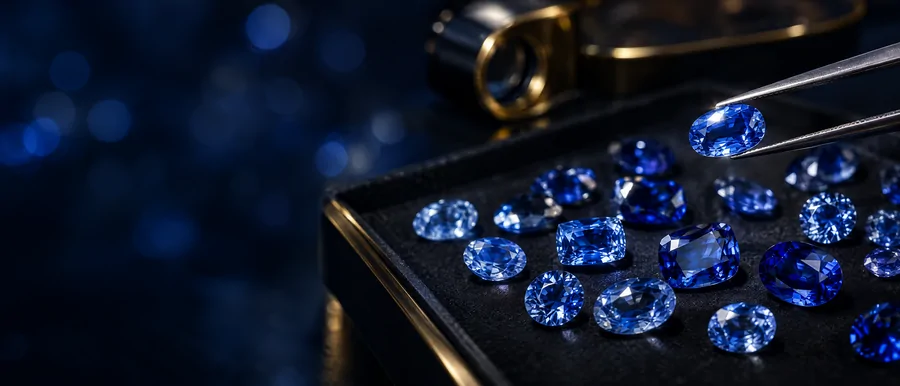
A loose sapphire is a polished sapphire that has not yet been mounted. Buying it unset lets you examine the gem from every angle, confirm its dimensions and design the piece around it.
Sapphire is corundum, a crystal of aluminum oxide rated 9 on the Mohs hardness scale. Red corundum, colored mainly by chromium, is ruby; every other color is sapphire. Blue sapphire owes its color mainly to iron and titanium. Every stone the platform currently lists is a natural sapphire, formed in the earth rather than grown in a laboratory.
Which sapphire colors can you buy?
Blue is the color most people link with the name, but fancy colors give designers far more room. Seylora currently lists nine color groups:
- Blue: light, bright blues to deep, dark tones.
- Yellow: pale lemon through strong golden yellow.
- Teal: blue and green blended in one face-up color.
- Purple: violet to plum.
- Pink: pastel to vivid. Where deep pink ends and ruby begins is drawn differently by different labs and markets.
- Green: olive to forest tones.
- Padparadscha: pinkish orange to orangy pink, named after the Sinhala word for the lotus blossom.
- Peach: soft, warm blends of pink and orange.
- Parti: two or more distinct colors within one crystal.
How to read a sapphire listing
When you compare sapphires for sale from several sources, details usually arrive in different formats. Every Seylora listing follows a single structure instead, so stones from different suppliers line up field by field.
| Listing field | What to check |
|---|---|
| Carat weight | Weight alone does not show how big the gem looks |
| Length, width and depth (mm) | Spread and height against the planned mounting |
| Shape | Fit with the design and with stock settings |
| Color and tone | Agreement between photos, video and description |
| Clarity and transparency | Inclusions that dull brightness or reach the surface |
| Cut quality | Washed-out or dark patches in the center |
| Treatment (heated, unheated, fracture filled or not stated) | Whether it is supplier-reported or lab documented |
| Origin | Whether a laboratory report supports the declared country |
| Certificate laboratory and report number | That the report matches weight and dimensions |
| Photos and video | Daylight-type lighting and more than one angle |
Color, tone and saturation come first
Color is the leading value factor for any colored gem, ahead of clarity, cut, weight, treatment and documented origin. Judge it in three parts: hue (the basic color), tone (how light or dark it reads) and saturation (how strong or grayish it is).
A very dark stone can look almost black indoors, while a very light one may read as pale. Ask for video under daylight-type lighting, because one still image can hide windowing, color zoning or a gray cast.
Ceylon blue is typically lighter to medium in tone and bright, whereas material from basalt-related deposits in parts of Australia and Thailand tends to be darker because it carries more iron. See Ceylon sapphires for Sri Lankan origin stones.
Treatment and origin evidence
Heating is common, permanent and accepted in the trade when disclosed, and many sapphires for sale have been heated. Never-heated stones of comparable color usually sell at a premium, which is why that claim needs proof. Read more about unheated sapphires and heat treatment basics.
On the platform, a supplier's treatment statement appears as supplier-reported and its origin statement as supplier-declared. Once a laboratory report is attached, that detail is marked lab documented, with the lab and report number shown. Seylora never upgrades a claim without the paperwork.
Origin is an expert opinion that labs such as GIA, SSEF, Gübelin, AGL and GRS reach through inclusions, trace element chemistry and spectroscopy. Suppliers on the platform are based in Sri Lanka, yet some gems carry a declared Madagascar origin, and the listing says so.
Choosing a loose sapphire for a ring, pendant or earrings
Start from the jewelry, then work back to the stone. Face-up size in millimeters matters more than carat weight when fitting a mounting, because two stones of equal weight can spread very differently depending on depth and outline.
Rings take the most knocks, so a hardness of 9 is a real advantage for everyday wear. Check the depth too: a deep pavilion sits higher and may need a taller head. Pendants see less contact, which gives more freedom with pointed shapes such as pear and marquise.
Earrings call for a matched pair close in color, tone and dimensions. Calibrated stones, cut to standard millimeter sizes, drop into ready-made mountings, while other gems usually need a setting made to measure.
Popular shapes and carat sizes
Oval and cushion outlines are widely used for sapphire. Browse by outline: oval, round, cushion cut, pear shaped, emerald cut, marquise, radiant cut, princess cut and heart shaped.
Or begin with weight using the 1 carat, 2 carat, 3 carat, 4 carat and 5 carat pages. Larger gems with good color are harder to find, so a lab report matters more as size goes up.
Where retailers find sapphires for sale
Jewelry businesses usually buy unset gems from dealers, cutters, exporters and trade platforms. Through Seylora, reviewed suppliers list individual loose sapphires and approved jewelry retailers, online stores and designers buy them. Trade prices appear only after approval, with one figure in US dollars for the whole stone rather than a rate per carat. Apply for a trade account to see them.
Reserve a gem online and the hold takes effect at once, so no other buyer can book it. The supplier then confirms the stone is physically in hand, and only after that does the reservation become an order; until then it stays with the supplier. Shipping, insurance and inspection are agreed order by order, and online stores can display available inventory through the gemstone API.
Private buyers cannot purchase on Seylora, but they can ask their jeweler to source through a trade platform like it.
Frequently asked questions
Are loose sapphires good for engagement rings?
Yes, sapphire is a practical engagement ring stone because it rates 9 on the Mohs scale, which makes it durable for daily wear. Pick a gem with good transparency, confirm its depth suits the setting height, and ask for treatment disclosure in writing.
What is the difference between a natural sapphire and a lab-grown sapphire?
A natural sapphire formed in the earth, while a lab-grown one is manufactured with the same chemistry and hardness. The two can look alike, so a laboratory report is the reliable way to confirm a gem is natural. Current Seylora listings are natural stones, each showing a report when the supplier provides one.
Can I buy a loose sapphire on Seylora as a private buyer?
No, Seylora sells only to approved trade accounts such as jewelry retailers, online stores and designers. A private buyer can still reach these gems by asking a jeweler to source one through a trade platform like Seylora. The jeweler reviews the listing, reserves the stone, and handles the setting.
Should I choose a sapphire by carat weight or by millimeter size?
Choose by millimeter size first, because face-up dimensions decide how large a gem looks and whether it fits a mounting. Two sapphires of the same weight can look quite different if one is cut deeper. Use the length, width and depth on each listing, then compare weights among stones of similar size.
How can I tell if a sapphire has been heat treated?
You usually cannot tell by eye, so a laboratory report is the dependable answer. Gemologists examine inclusions such as rutile silk and small disc-like fractures for signs of heating. On Seylora, a treatment value without a report shows as supplier-reported and becomes lab documented only when a report is attached.