
Teal sapphire at a glance
| Gem species | Corundum, Mohs hardness 9 |
|---|---|
| Cause of color | Iron and titanium (blue) layered with iron-related yellow |
| Laboratory naming | Greenish blue or bluish green sapphire |
| Usual treatment | Varies by source; check the value on each listing |
| Main sources | Australia, Montana (USA), Nigeria, Madagascar, Sri Lanka |
| Check before buying | Blue to green balance, zoning, look under warm light |
What is listed right now
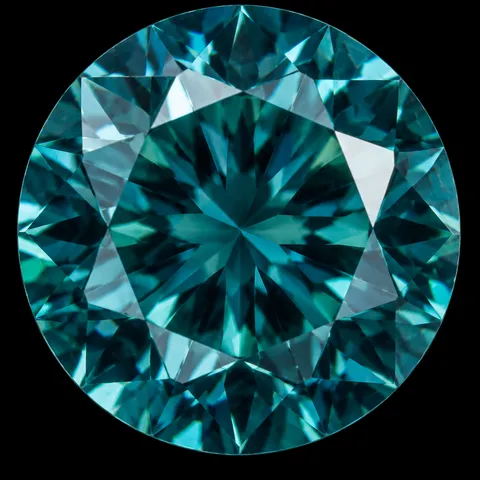
Right now the catalog holds 8 teal sapphires, from 1.01 to 5.47 ct, and 8 are available to reserve. The most common shapes are oval, round, radiant. By the suppliers' own statements, 6 are heated and 2 unheated. 2 listings include a video.
Jump to a shape: Oval (3), Round (2), Radiant (1), Emerald (1), Cushion (1).
What jewelers mean by teal
Teal became a popular retail word over the last decade for corundum sitting between blue and green. A laboratory will describe the same stone as greenish blue or bluish green, because labs do not grade a color called teal. That gives sellers latitude, so judge the stone in front of you: some are almost blue with a green flash, others mostly green with a blue edge.
Two causes stack together. Iron and titanium produce blue, iron on its own adds yellow, and the eye mixes them into green. When the causes grow in separate layers you see zoning, parallel bands that a cutter can blend face-up or deliberately show.
Sources, and how Sri Lankan material compares
Much blue-green corundum comes from basalt-related deposits in Australia, Nigeria and Thailand, and from Montana, where crystals are often small and bright. Gravels in Sri Lanka and Madagascar add lighter, more sparkling material. Teal from the island is less common than its blues, so a matched pair is worth reserving when one appears.
Reading color under different lights
These stones change more with lighting than pure blues. In daylight or cool LED the blue side usually leads; under warm tungsten or candlelight the green and yellow side comes forward. Watch the video where one is provided and read the photos with the light source in mind. For a bridal client, show the stone under the lighting it will actually live in.
Tone matters as well. Dark material can turn olive or nearly black, which hurts its appeal, while medium tones with good saturation stay lively both outdoors and in a restaurant.
How teal is graded and priced
With no laboratory grade for teal, the trade prices it on the same factors as other corundum: how attractive the color is, how clean the stone looks, how well it is cut and how large it is. An even, saturated blend that reads as one color usually sells for more than a stone with obvious banding, unless the banding is crisp enough to be the feature.
Sizes above two carats with good clarity are uncommon in Montana and Sri Lankan material and are priced accordingly. Australian and Nigerian goods are found in larger sizes more often but tend to be darker. Use the carat filter together with the photos to find the balance of size and brightness a client wants.
Describing teal to clients
Because teal shifts with light, product photos rarely tell the whole story. If you show a stone on your own website, picture it in daylight and in warm light, and describe it in plain words, for example more blue than green, or an even blend. Clients who expect a green stone and receive a mostly blue one can be disappointed. A short video turning the stone under one light source does more than several still images, which is why the video filter is useful here.
Treatment and disclosure
Heating is used on blue-green goods from some sources and not from others, so there is no safe assumption. The treatment value tells you what the supplier declared. With a laboratory report attached, the listing is labelled lab documented and links the report; without one, unheated remains a supplier-reported claim. Diffusion treated material carries its own label.
Using teal in a collection
Teal works in engagement rings, alternative bridal and men's jewelry, where buyers want something other than classic blue. Because each stone's balance of blue and green is personal, these sell better individually than in large matched parcels. Approved retailers can reserve a stone online once a client has decided, or show the live inventory on their own site through the API.
Questions buyers ask
Is teal sapphire a real sapphire?
Yes. It is natural corundum, the same mineral as blue sapphire and ruby. Teal only describes the blue-green color, which laboratories record as greenish blue or bluish green.
Are teal sapphires good for engagement rings?
Corundum is 9 on the Mohs scale and has no cleavage, so these stones handle daily wear well. Pick a medium tone with good saturation and check it under warm light, where the green side shows more.
Why do teal stones cost less than fine blue?
The market has historically paid most for pure blue, and blue-green goods were long sold at a discount. Demand has grown, but prices per carat usually stay below fine blues of similar size and quality.
Is teal sapphire heated?
It depends on the source and the individual stone. Some blue-green goods are heated to lighten or brighten them, and others are sold untreated. Each listing states the supplier's treatment value, and a stone is labelled lab documented only when a report is attached.
How many teal sapphires are in stock?
8 teal stones are listed right now, from 1.01 to 5.47 ct. The list changes as stones sell and new ones arrive.
What is the difference between teal and parti?
Teal is a blend or near blend of blue and green. Parti stones show two or more clearly separate colors, often blue, green and yellow, in distinct zones. See the parti page for those.